Subsidence is one of those words that can send a property buyer's heart straight into their shoes — and not without reason. It's one of the most serious structural issues a home can have. But it's also one of the most misunderstood. As a Hounslow surveyor who has inspected hundreds of properties across the London Borough of Hounslow, I want to give you an honest, clear picture of what subsidence actually is, what causes it in Hounslow specifically, and what your options are if a survey finds it.
What Is Subsidence — In Plain English?
Subsidence happens when the ground beneath a building's foundations moves downward — causing the structure above to sink, shift and crack. Unlike settlement, which is a normal and gradual process that happens in all buildings, subsidence is abnormal movement that can compromise the structural integrity of the property.
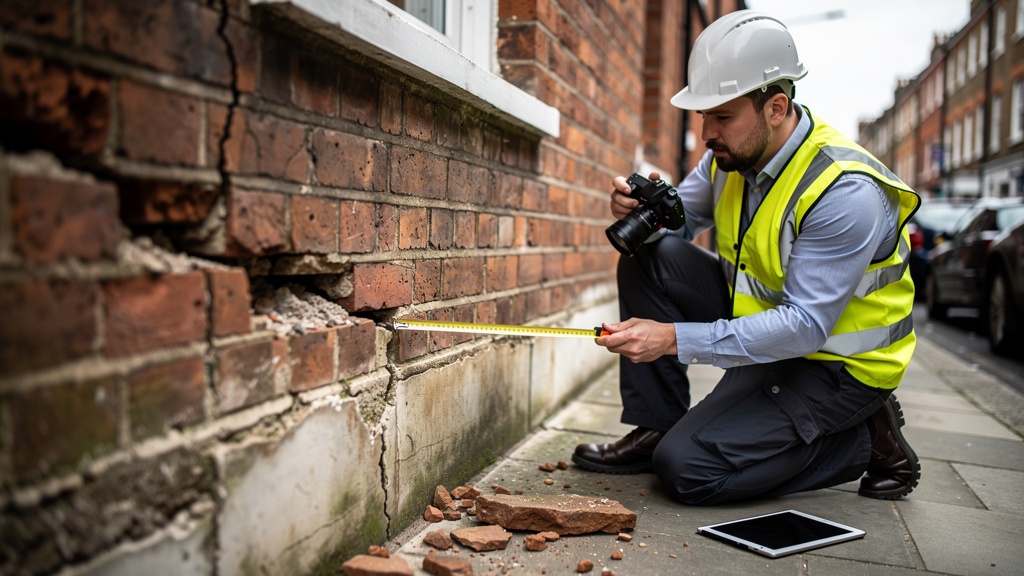
The hallmark signs are diagonal cracks, typically appearing at the corners of windows and doors, widening as they go upward. They're often described as "staircase" cracks because they tend to follow the mortar joints in a brickwork wall.
"Not all cracks mean subsidence — but all subsidence produces cracks. The key is understanding which type of cracking you're looking at, what direction it runs, how wide it is, and whether it's active or historic."— James Henderson, Hounslow Surveyors
What Causes Subsidence in Hounslow Properties?
Hounslow has its own particular subsidence risk profile, shaped by the local geology, the age and type of housing stock, and the prevalence of mature trees in many residential streets.
Clay Shrinkage
Much of the ground beneath Hounslow sits on London Clay — a heavy, expansive soil that shrinks significantly during dry summers and swells when it gets wet. This shrink-swell behaviour is the single most common cause of subsidence in the Hounslow area. Properties built on shallow foundations — particularly Victorian and Edwardian terraces — are most vulnerable.
The unusually dry summer of 2022 generated a significant spike in subsidence-related insurance claims across Greater London, and Hounslow was no exception. Several properties we inspected in Isleworth and Heston in late 2022 showed clear evidence of new active cracking after years of apparent dormancy.
Tree Roots
Mature trees are one of Hounslow's great pleasures — and one of its biggest structural risks. Tree roots can extract significant moisture from clay soil, accelerating shrinkage. They can also directly invade drainage systems, causing leaks that further destabilise the ground. Streets with large plane trees, limes and horse chestnuts are particularly high-risk.
Leaking Drains
A leaking underground drain can gradually erode and wash away the fine particles from the soil beneath a foundation — a process called "leaching." Over time, this creates voids that the foundation eventually moves into. We recommend a drain CCTV survey as a precaution on any property where subsidence is suspected.
Historic Mining and Ground Works
Parts of the wider West London area have a history of gravel extraction and other ground works that can leave legacy voids. Always worth checking with the local authority and a ground investigation if you're buying in an unfamiliar part of the Hounslow area.
Surveyor's Tip
Before you make an offer on a property in Hounslow, check whether there are any large trees within 5 metres of the building. On clay soil, anything within 10 metres should be investigated. The HSE has published guidance on tree-to-foundation distances that our surveyors reference during inspections.
How to Spot Subsidence: What to Look For
During a visual inspection, our expert surveyors look for specific indicators of potential subsidence. Here's what you should be watching for yourself when viewing a property:
- Diagonal cracks: Especially those running at 45 degrees from the corners of window and door openings
- Stepped cracks in brickwork: Following the mortar joints in a staircase pattern
- Cracks that are wider at the top than the bottom: Suggesting downward movement on one side
- Doors and windows sticking: A sign that the structural frame is distorting
- Gaps between walls and ceilings/floors: Indicating differential movement
- Visible cracking in render or external brickwork
It's important to note that not all cracks are subsidence. Hairline cracks in plaster are normal. Even some wider cracks are simply the result of thermal movement or normal settlement. The direction, width, pattern and depth of a crack all matter enormously — which is why only a trained RICS surveyor can reliably distinguish the serious from the benign.
What Happens If My Hounslow Survey Finds Subsidence?
First — don't panic. Finding evidence of subsidence in a survey doesn't automatically mean the property is unsaleable or uninsurable. Context is everything.
Our surveyors categorise subsidence findings as either historic/inactive or active. Historic subsidence — movement that has occurred, stabilised and been properly remediated — is far less concerning than active movement. A property that was underpinned 20 years ago and has been stable ever since is not necessarily a bad buy, provided the underpinning was properly done and documented.
Your Options
- Commission a structural engineer's report: Our surveyors can refer you to qualified structural engineers who will provide a detailed assessment of the cause, extent and recommended remediation of any subsidence found.
- Negotiate the purchase price: Evidence of subsidence is almost always grounds for a price renegotiation. Armed with our Level 3 building survey and a structural engineer's cost estimate, you're in a strong position.
- Walk away: In some cases, the right advice is simply not to proceed. We'll tell you honestly if we think a property carries too much risk.
- Require remediation before exchange: If the vendor is willing, remediation works can be completed before contracts are exchanged.
Subsidence and Buildings Insurance
A property with a history of subsidence can be harder — and more expensive — to insure. Insurers typically require a full structural engineer's report and may impose a higher excess or premium. It's worth getting insurance quotes before you exchange contracts on a property with any subsidence history.
Some specialist insurers focus on properties with structural issues — your solicitor or mortgage broker should be able to point you in the right direction.
Important
If you're buying a property in Hounslow and your mortgage lender's valuer notes potential subsidence, you may find that your mortgage offer is withdrawn or conditional on further investigation. This is another reason to commission a Level 3 survey before the lender's valuation — not after.
Why a Level 3 Survey Is Essential for Subsidence Risk
A Level 2 homebuyer report will flag obvious signs of potential subsidence, but it won't provide the detailed analysis that an active or complex subsidence situation requires. For any property in Hounslow built before 1950, or any property showing signs of structural movement, a Level 3 full building survey is strongly recommended.
Our Level 3 surveys provide a detailed description of every defect, including an assessment of its likely cause and recommendations for remediation. We take extensive measurements, document everything photographically and — where appropriate — recommend specialist investigations.
Frequently Asked Questions: Subsidence in Hounslow
Parts of Hounslow sit on London Clay, which is associated with higher subsidence risk than sandy or gravel substrates. However, risk varies significantly by street and property. Properties near large trees or watercourses face elevated risk. A professional survey and a soil/drainage check are the only reliable ways to assess risk for a specific property.
Costs vary widely. Simple remediation — such as removing a problematic tree and waiting for the soil to re-stabilise — may cost a few thousand pounds. Underpinning can cost £10,000–£50,000 depending on the extent of the works. Your buildings insurer will usually cover the cost of underpinning if subsidence is covered under your policy.
Yes, in many cases — particularly if the subsidence is historic and the property has been underpinned and stabilised. Some lenders are more cautious than others. A specialist mortgage broker can help you find a lender who is comfortable with the specific property's situation.
Thinking of Buying a Property in Hounslow?
Don't take chances with structural issues. Our RICS accredited surveyors will give you a thorough, honest assessment of any property you're considering — including a detailed investigation of any signs of subsidence.
Get a Free Survey Quote