Victorian terraces are Hounslow's most characterful — and most surveyed — homes. I've inspected hundreds of them across Isleworth, Heston, Spring Grove and Hounslow town over the years. They're remarkable buildings: solid, adaptable, and built to last. But "built to last" doesn't mean "built without problems." Here's what I look for on every Victorian terrace survey in Hounslow — and what you should watch out for as a buyer.
How Victorian Terraces Were Built
Victorian terraces in Hounslow were built with solid brick walls (typically 9 inches thick for external walls), timber floor joists and roof trusses, slate roofing, and single-glazed sash windows. There was no cavity wall insulation, no damp-proof course by modern standards (though some had slate DPCs), and no central heating. Understanding this original construction helps you understand the types of problems that can arise.
Most of these properties have been altered over the last 130 years — extensions added at the rear, original floors replaced, windows changed, roofs repaired (sometimes poorly), lofts boarded, services updated (or not). Each modification is an opportunity for problems, and each problem is an opportunity for an informed buyer.
Top Issues We Find in Victorian Hounslow Terraces
1. Rising Damp and Damp-Proof Course Failure
The original DPC (typically slate or bitumen) may have failed after 130+ years, been bridged by raised external ground levels, or never been adequate in the first place. Ground floor rooms in Victorian terraces are particularly prone to rising damp. Our moisture meter is one of the first tools we reach for when entering a ground floor room.
2. Chimney Issues
Most Victorian terraces had multiple chimney stacks — and most have been modified, partially demolished or cappedover the years. Failed chimney flashings are one of the most common sources of penetrating damp in these properties. Partially demolished chimney stacks that have not been properly weathered off are also a regular finding. And if there are still working fireplaces, the condition of the flue lining is an important safety and structural consideration.
3. Bay Window Structural Issues
Bay windows on Victorian terraces are architecturally lovely and structurally demanding. The lintels over bay windows can fail as the timber rots or the masonry mortar deteriorates. Slipping bay window roofs are also common. We inspect every bay window carefully for signs of movement, cracking or lintel failure.
4. Subsidence and Structural Movement
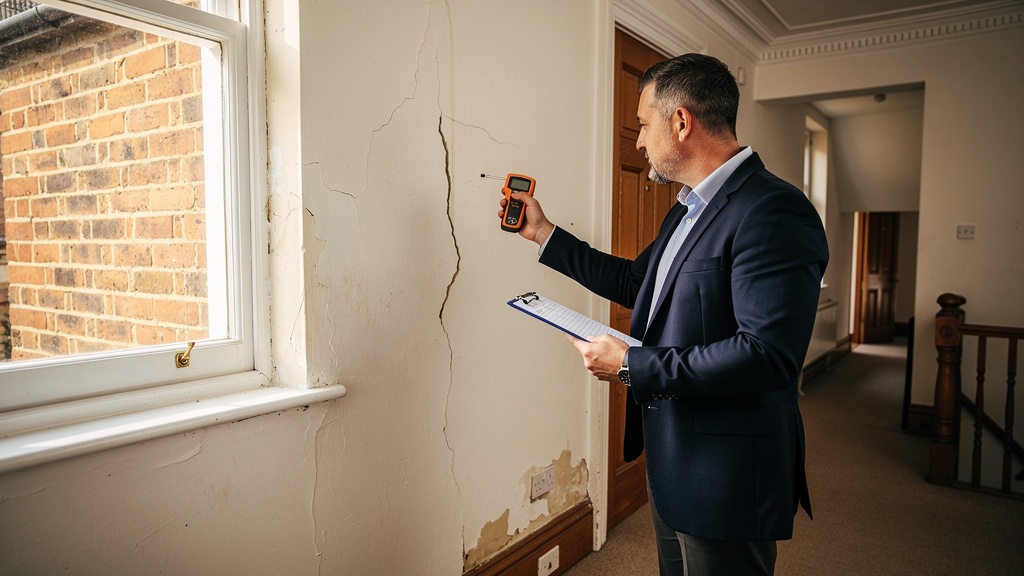
Victorian terraces are built on shallow foundations — typically only 2–3 feet deep — on London Clay, which expands and contracts significantly with moisture changes. Tree roots from mature street trees are a major subsidence risk factor in many Hounslow streets. Diagonal cracking at the corners of windows and doors should always be investigated by a Level 3 survey. See our full guide to subsidence in Hounslow properties.
5. Rear Extensions — Often Unauthorised
The majority of Victorian terraces in Hounslow have had rear extensions added at some point. Some of these are perfectly built and have all the correct documentation. Many are not. We check for evidence of building regulations approval for any extensions, assess the quality of the construction and investigate whether any alterations have affected the structural integrity of the original building.
6. Electrical and Services
Victorian properties were not built with electricity in mind. Original wiring — rubber-insulated, and up to 70 years old in some cases — is a fire risk. We flag any visible signs of outdated or unsafe electrical installation and recommend an NICEIC inspection. Old lead pipework is also a consideration in the oldest parts of the housing stock.
Why a Level 3 Survey Is Essential for Victorian Terraces
Given the complexity, age and potential issues of Victorian terraces in Hounslow, a Level 3 full building survey is strongly recommended — every time. A Level 2 homebuyer report will flag obvious defects, but the Level 3 goes much deeper: into the roof space, behind skirtings, up to the chimney stacks and through every room systematically, with detailed explanations of every defect found.
In 15 years of surveying Victorian terraces in Hounslow, I've rarely written a Level 3 report that didn't identify at least one significant defect that a Level 2 would have missed. The extra investment is almost always worthwhile.
Victorian Terrace FAQ
Absolutely — Victorian terraces are fantastic homes that have stood for over a century and will stand for a century more if properly maintained. The key is understanding their condition before you buy. A thorough Level 3 survey gives you that understanding and the evidence to renegotiate the price or require repairs if significant defects are found.
As a very rough guide, budget 1–2% of the property value per year for maintenance on a Victorian terrace. The actual figure will depend heavily on the property's current condition — which is exactly what a Level 3 survey will reveal. Properties that have been well maintained require less expenditure; those with deferred maintenance can require significant catch-up spending.
Always a Level 3 full building survey. No exceptions. The age and complexity of these properties requires the most comprehensive inspection available. Any competent surveyor who knows Hounslow's Victorian stock will tell you the same.
Buying a Victorian Terrace in Hounslow?
Our surveyors have inspected hundreds of Victorian terraces across the Hounslow area. We know these properties — and we know what to look for. Get your free quote today.
Book Your Level 3 Survey